

A New Era in Construction Education: Sustainability and Digital Technologies Take Center Stage
(Beyond Bricks and Mortar)
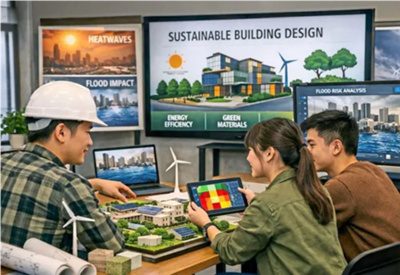
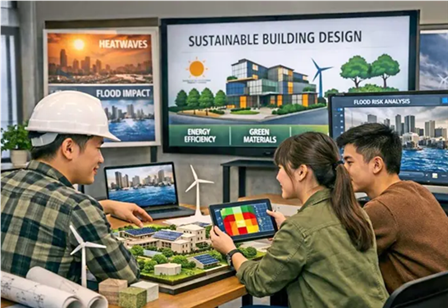
An article titled “Beyond Bricks and Mortar,” written by Rebecca Rajaendram and published in the Malaysian newspaper The Star on August 2, 2026, emphasizes that construction and civil engineering education is no longer limited to technical knowledge and practical skills; sustainability, climate resilience, and digital technologies have become core competencies for the sector. The article also mentions that Malaysia is preparing to develop a new internationally recognized green building certification with Cambridge University. Professor Sudharshan N. Raman, Head of the Civil Engineering Department at Monash University Malaysia, states that sustainable construction encompasses reducing carbon emissions, optimizing energy and resource consumption, recycling waste, and making structures more resilient to climate risks. According to him, the buildings and cities of the future must be “low-carbon, based on circular resource use, climate-resilient, and digitally connected.”
Academics' assessments highlight the need for educational programs to adapt to this transformation. Professor Sudharshan argues that the foundations of engineering and urban planning should be supported by sustainability, circular economy, climate resilience, systems and digital engineering, innovation, leadership, and ethical design. Mas Amelia Mas Abdul Rahman, Program Director and lecturer at MTTC College, states that the concept of sustainability should be integrated into education from the diploma level, emphasizing the importance of students developing a sense of responsibility to ensure their designs do not harm the environment and society. Mas Amelia also stresses that technologies such as virtual construction simulations are powerful aids in planning and implementation, but cannot replace human reasoning and design thinking. Siti Alia Aisya Mohamed Rusli, a BIM lecturer at MTTC, also notes that digital technologies do not replace applied education; rather, they enable students to transfer knowledge to projects more quickly and efficiently.
Dr. Siti Fatin Mohd Razali, Associate Professor and Head of the Smart and Sustainable Cities Research Centre at Universiti Kebangsaan Malaysia (UKM), states that strong engineering foundations and knowledge of digital technology are indispensable alongside sustainability theories. Dr. Shahrizan Baharom, Head of the Civil Engineering Undergraduate Program at UKM, points out that artificial intelligence has become a significant “game changer” in the sector, and that BIM software can identify project conflicts before construction even begins by integrating architecture, geographic information systems, mechanical-electrical systems, and water infrastructure into a single environment. The overall message of the news is summarized in Professor Sudharshan's assessment: sustainable construction is a shared responsibility not only of universities but also of academia, industry, the public sector, and society, and the future built environment needs to be environmentally responsible, economically viable, socially inclusive, and resilient to climate change.
Source: Rebecca Rajaendram, “Beyond bricks and mortar”, The Star, Education, August 2, 2026.
8/17/2026 | Mühendislik Fakültesi
All information, documents, photos, videos, images, texts, etc. on our web pages cannot be used without permission and without citing the source. Otherwise: Legal and criminal action will be taken within the scope of Law No. 5846. All rights of Şırnak University are reserved.